Inside Iman Gadzhi’s Clipping Operation
- Gadzhi’s own Instagram has posted around 110 times. The machine around him has posted thousands: an owned repost account with 3,200+ clips, a swarm of fan pages, and official bounties of up to $2,000 a video.
- In April 2025 he went a level deeper and became co-owner of Whop, the marketplace where clippers get paid, which now moves roughly $40,000 a day to nearly half a million creators at about $3 per thousand views.
- The open version keeps blowing up in public, most recently Polymarket’s fake-winnings scandal. The controlled version is ours: our co-founder personally generated 300M+ views for Gadzhi on accounts Gadzhi owns.
Iman Gadzhi’s Instagram has around 110 posts. The account that exists to repost him has more than 3,200. The first belongs to one of the most-watched business creators alive, a 26-year-old with roughly 5.9 million YouTube subscribers. The second is the machine, and the machine is the interesting part.
One video, a thousand hands: the Gadzhi clipping machine
The machine has three layers. The one Gadzhi controls directly is @imangadzhireels, a repurposing account that has pushed those 3,200-plus clips to about a million followers at the time of writing. Every long-form upload gets carved into 30-to-60-second moments and drip-fed to the feeds.
The second layer costs him nothing. Fan-run clip pages on TikTok, Instagram, YouTube and Facebook, some with hundreds of thousands of followers, cut his material because his face reliably pulls views. Nobody commissioned them. A page that posts Gadzhi grows, so the pages keep coming.
The third layer is paid. Gadzhi runs an official bounty campaign on Whop that pays anyone who clips him “up to $2k” a video. Its pitch line is the entire business model in eight words: “If your content hits, so do the payouts.” When Whop explains clipping to newcomers, Gadzhi is the example it reaches for.
He bought Whop, the clipping marketplace
Most creators rent clippers. Gadzhi bought into the market they work in.
In April 2025, Whop announced him as co-owner and investor, alongside backers including Peter Thiel and Insight Partners, on a platform then set to process over $1 billion in payments a year. “Whop is the most exciting platform in the digital economy right now,” he said at the time. The clippers cutting his videos now get paid on rails he part-owns.
Those rails move serious money. Forbes reported in April that Whop pays out roughly $40,000 a day to some 480,000 creators, around a million videos a month. Forbes has put common clipping rates at $1 to $5 per thousand views, call it $3 in the middle. Traditional advertising buys those same thousand impressions for $40 to $80. That gap is the whole reason this industry exists.
Everyone big is running it
Bloomberg revealed in late 2025 that MrBeast employs more than a thousand clippers, paid $50 per 100,000 views. The AI startup Cluely put roughly 700 clippers on its content; its founder crowned the company “the kings of distribution”. When NPR went looking at what it dubbed the clipping economy, it found rates all over the map: $1 per thousand views to clip Major League Baseball games, $25 per thousand to clip one AI startup’s product.
One statistic from NPR explains why they all bother. The streamer Hasan Piker’s average livestream racks up about 33,000 views. His average clip does more than 700,000. Twenty-one times the reach, after the show ended, from footage that already existed.
Clipping has stopped being a freelance editing gig and turned into a distribution layer for internet businesses, the way ad networks were for the last era of the web. Gadzhi’s move stands out because he noticed early enough to buy a piece of the pipes.
Where it breaks
Pay an anonymous crowd per view and you will get views. The mechanism never varies: you put a bounty on attention, the crowd chases it, and the person willing to stretch your story furthest collects the most. What you cannot buy back afterwards is the choice of accounts, markets, or message.
In June, CBS News reported on a Wall Street Journal analysis of Polymarket’s clipper campaigns: across more than 1,100 TikToks, creators falsely depicted about $1.9 million in winnings, including 118 videos celebrating nearly $900,000 in “wins” on bets that would actually have lost more than $166,000. Polymarket ended up auditing its own marketing in public.
A month later, NPR found music labels paying influencers to push songs without disclosure, down to running burner accounts that clip archival footage to make artists trend. Different industries, same chain, and the brand wears whatever the crowd did to get the views.
The version with a steering wheel
None of this is theoretical for us. Our co-founder Emrah Bayraktar has personally generated more than 300 million views for Iman Gadzhi: two pages, built from zero, grown to 180K followers on Instagram and 280K on TikTok, on accounts Gadzhi owns. Forbes put Emrah’s personal tally across brands including Gadzhi and Belmar at over 400 million views.
At that scale you learn exactly where the open model strains: which views were real, which markets they landed in, what any of them actually sold. You also learn that views are not created equal. Fifty thousand of them from the exact people who buy what you sell, in the market you sell it, beat five million from viewers who never will. Vision Clipping is that machine rebuilt around the failure points. A private team instead of a leaderboard. Accounts you own instead of rented reach. Attribution instead of a screenshot of a view counter. The deeper comparison is in mass campaigns versus owned campaigns and what campaigns really cost.
300 million of those views? That was us.
Our co-founder built two of Gadzhi’s pages from zero and took them past 300 million views. That playbook is now the machine Vision Clipping runs for clients: a full private team handling strategy, cutting and posting on accounts you own, in the markets you sell into. We run the operation. You keep the asset.
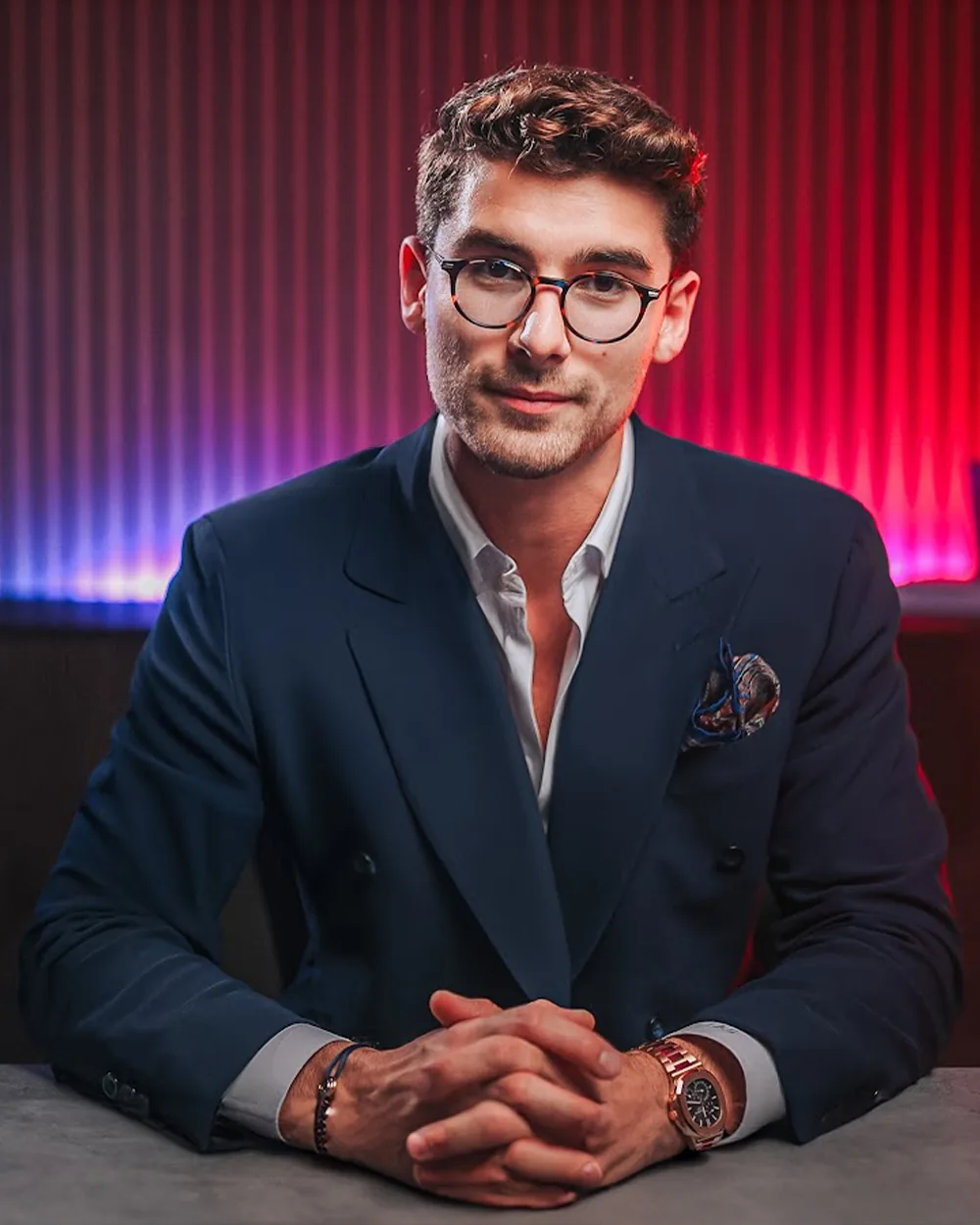 300M+views for Iman Gadzhi · owned accounts · ownership kept
Frequently asked questions
Yes. He runs an official campaign on Whop, the marketplace he co-owns, paying up to $2,000 for a single clip cut from his content. It sits alongside his owned repurposing account and a large ecosystem of fan-run clip pages.
A system that turns long-form content, such as YouTube videos, podcasts and livestreams, into a constant stream of short clips distributed across TikTok, Instagram Reels and YouTube Shorts, through owned accounts, fan pages and paid freelance clippers.
Marketplace clipping pays an open crowd per view: high volume, zero control over accounts, markets or message. Managed clipping runs distribution on accounts you own, into the markets you choose, with attribution on what converted. That controlled model is what Vision Clipping operates.
Sources
- Whop, Iman Gadzhi’s official paid clipping campaign page
- GlobeNewswire, “Whop Levels Up with Iman Gadzhi as Co-Owner and Investor” (April 2025)
- Grit Daily, “Iman Gadzhi Joins Whop as Co-Owner” (Spencer Hulse, 2025)
- Forbes, “Marketplace of Virality: How an 18-Year-Old Powers Polymarket’s Reach” (Boaz Sobrado, April 2026)
- Bloomberg, “Paid Armies of ‘Clippers’ Boost Internet Stars Like MrBeast” (Cecilia D’Anastasio, October 2025)
- Complex, on MrBeast’s clipper pay and the Clipping platform (Trey Alston, November 2025)
- The San Francisco Standard, on Cluely’s 700 clippers (Rya Jetha, July 2025)
- NPR, “The clipping economy” (Bobby Allyn, May 2026)
- CBS News, on the WSJ analysis of Polymarket’s clipper marketing (Mary Cunningham, June 2026)
- NPR, “Music influencers are getting paid to promote songs” (Isabella Gomez Sarmiento, July 2026)
- Forbes, “Inside The Clipping Farms Driving Fintech’s Marketing Boom” (Boaz Sobrado, February 2026)
- Whop, “What is clipping?” (October 2025)